AI Adoption in Brazil: How Companies Are Using Artificial Intelligence
Wonder how AI is reshaping industries in Brazil? AI adoption brazil 2026 shows a landscape buzzing with transformation, especially in sectors like agriculture and fintech.
Many companies wrestle with where to start or how to scale AI effectively. You might recognize this if your business is aiming to stay ahead in a rapidly evolving market.
Stick around, and you’ll see real examples, challenges, and strategies that reveal how AI is moving from buzzword to game changer in Brazil.
Current landscape of AI adoption in Brazil
The current landscape of AI adoption in Brazil shows a dynamic and rapidly evolving environment shaped by various industries aggressively integrating artificial intelligence solutions. Brazil is recognized as the leading Latin American country in AI investment, driven by both large corporations and startups eager to enhance productivity and innovation.
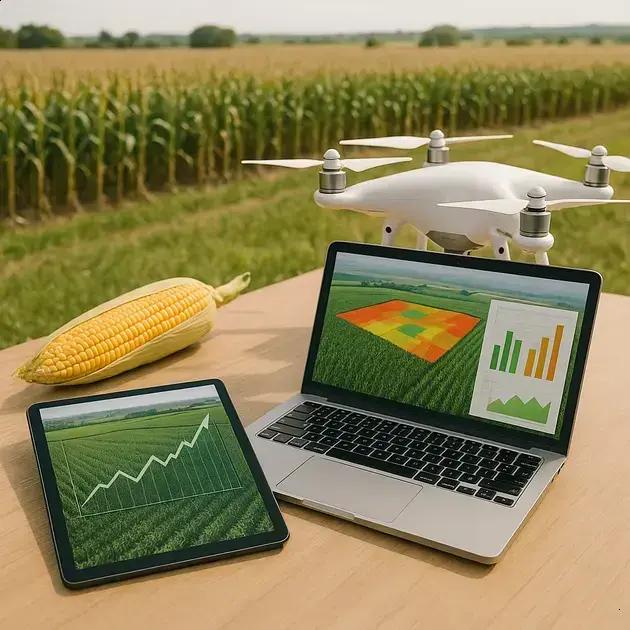
A significant part of AI growth comes from sectors such as agriculture, fintech, and healthcare. In agriculture, AI-powered analytics and drones optimize crop yields and reduce environmental impact. Fintech companies use AI for fraud detection and personalized financial services, while healthcare providers adopt AI to improve diagnostics and patient management.
Government initiatives and investments also play a crucial role in this landscape. The Brazilian Ministry of Science, Technology and Innovation supports programs encouraging AI research and development nationwide, fostering partnerships between academia and industry.
Challenges remain, including the need for clear regulatory frameworks and skilled professionals to handle AI technologies. Nonetheless, companies continue to adapt quickly, leveraging AI to stay competitive both locally and globally.
Key sectors driving AI innovation
Several key sectors in Brazil are spearheading the adoption of artificial intelligence, each demonstrating unique applications and innovations that contribute significantly to the country’s AI growth. The agriculture sector leverages AI technologies such as precision farming, drone surveillance, and predictive analytics to optimize crop production and resource management.
The fintech sector is another major driver, with companies using AI for fraud detection, credit scoring, and customer service automation. These applications increase security and improve user experience, making financial services more accessible and efficient.
In healthcare, AI aids in diagnostics, patient monitoring, and personalized treatment plans. AI-powered imaging tools and data analysis help healthcare providers make faster and more accurate decisions, improving patient outcomes.
- Agribusiness: Employs AI tools developed by startups and established companies like Agrotools, specializing in data solutions for farming, supported by the Brazilian Ministry of Agriculture.
- Fintech: Includes companies such as Nubank, recognized for AI-based fraud detection and credit automation, operating under financial regulatory bodies like Banco Central do Brasil.
- Healthcare: Platforms like Memed use AI to enhance prescription accuracy, regulated by the Brazilian Health Regulatory Agency (ANVISA).
- Retail: Major retailers apply AI for inventory management and personalized marketing, increasing operational efficiency and customer satisfaction.
- Manufacturing: Uses AI-driven predictive maintenance and quality control systems to reduce downtime and defects.
These sectors not only reflect Brazil’s commitment to AI innovation but also set examples that other industries are beginning to follow, boosting overall economic productivity.
Leading companies and their AI strategies
Many leading companies in Brazil have developed innovative AI strategies to maintain a competitive edge and accelerate growth. These strategies often focus on combining AI technologies with the company’s core business processes to enhance efficiency and drive new value.
Companies like Nubank, one of the largest fintech firms in Latin America, use AI for advanced fraud detection systems, customer service chatbots, and credit scoring algorithms. Nubank is regulated by the Banco Central do Brasil and continuously invests in AI to personalize financial products and improve user experience.
Another example is Embraer, a global aerospace company headquartered in Brazil. They use AI-driven predictive maintenance to reduce aircraft downtime and improve safety. Embraer’s AI initiatives focus on data analytics and machine learning models to optimize manufacturing and operational workflows.
Magazine Luiza, a leading retailer, implements AI to optimize inventory management and enhance personalized marketing campaigns. Their AI systems enable real-time demand forecasting and automated supply chain decisions, improving customer satisfaction and reducing costs.
Petrobras, Brazil’s state-controlled oil company, leverages AI to monitor pipeline integrity and predict equipment failures. Their strategies emphasize operational efficiency and risk management, incorporating AI-driven sensors and data analysis supported by the Ministry of Mines and Energy.
These companies invest not only in technology but also in training programs to develop AI talent internally, ensuring sustainable growth and innovation. Their AI journeys serve as benchmarks for other firms looking to integrate artificial intelligence effectively.
Challenges and regulatory environment
Brazil faces several challenges in the adoption of AI, primarily related to regulation, data privacy, and the availability of skilled professionals. The legal framework is still evolving, with lawmakers working to balance innovation with ethical standards and security concerns.
The Brazilian General Data Protection Law (Lei Geral de Proteção de Dados – LGPD) is a key regulation that impacts how companies handle personal data. Enforced by the National Data Protection Authority (ANPD), it sets strict rules on data collection, storage, and usage that organizations must comply with when deploying AI solutions.
Another significant issue is the lack of specialized talent trained in AI and data science. Educational institutions and private entities are developing training programs, but the demand for expertise currently exceeds supply, which limits the speed of AI integration.
Companies must also navigate complex bureaucratic processes to invest in AI initiatives, and there is a need for clearer guidelines on liability and accountability for AI decisions. Ongoing discussions about regulation include principles for fairness, transparency, and responsible AI use.
Despite these challenges, Brazil’s regulatory environment is becoming increasingly supportive, with government programs encouraging innovation and ethical AI standards. Collaboration between public and private sectors is essential to overcome barriers and promote sustainable AI adoption.
Future outlook and global comparisons
The future outlook for AI adoption in Brazil is promising, marked by increasing investments and expanding applications across various industries. Brazilian companies are expected to integrate AI more deeply into business operations to enhance productivity, innovation, and competitiveness on a global scale.
Compared to global markets, Brazil shows unique strengths such as a thriving fintech ecosystem and a robust agricultural sector leveraging AI for precision farming. However, challenges like infrastructure gaps and the need for regulatory clarity still affect growth pace.
Global comparisons reveal that Brazil is catching up with developed countries by focusing on practical AI solutions tuned to local market needs. Countries like the United States and China lead in AI research and development, but Brazil’s emphasis on sectors like agriculture and finance offers competitive niches.
Government initiatives and partnerships with universities aim to close the talent gap and promote ethical AI practices. This collaborative approach aims to sustain growth and ensure Brazil’s integration in the worldwide AI innovation landscape.
Brazil’s evolving AI landscape brings both opportunities and responsibilities as businesses prepare to navigate the complexities of adoption while aiming for long-term economic and social benefits.
FAQ – Frequently Asked Questions about AI Adoption in Brazil
What are the main sectors driving AI adoption in Brazil?
Key sectors include agriculture, fintech, healthcare, retail, and manufacturing, each applying AI to optimize processes and drive innovation.
How is Brazil’s regulatory environment impacting AI adoption?
Brazil’s General Data Protection Law (LGPD) ensures data privacy and security, shaping how companies implement AI ethically and responsibly.
What challenges do Brazilian companies face when adopting AI?
Challenges include a shortage of skilled AI professionals, evolving regulations, and the need for clearer guidelines on liability and accountability.
How do leading Brazilian companies utilize AI?
Companies like Nubank, Embraer, Magazine Luiza, and Petrobras use AI for fraud detection, predictive maintenance, inventory management, and operational efficiency.
How does Brazil compare globally in AI adoption?
Brazil is progressing with strengths in practical applications within agriculture and fintech, while continuing to bridge gaps in infrastructure and regulatory clarity compared to leaders like the US and China.
What is the outlook for AI in Brazil’s future?
With growing investments, government support, and talent development, Brazil aims to expand AI integration across industries, driving economic growth and global competitiveness.